
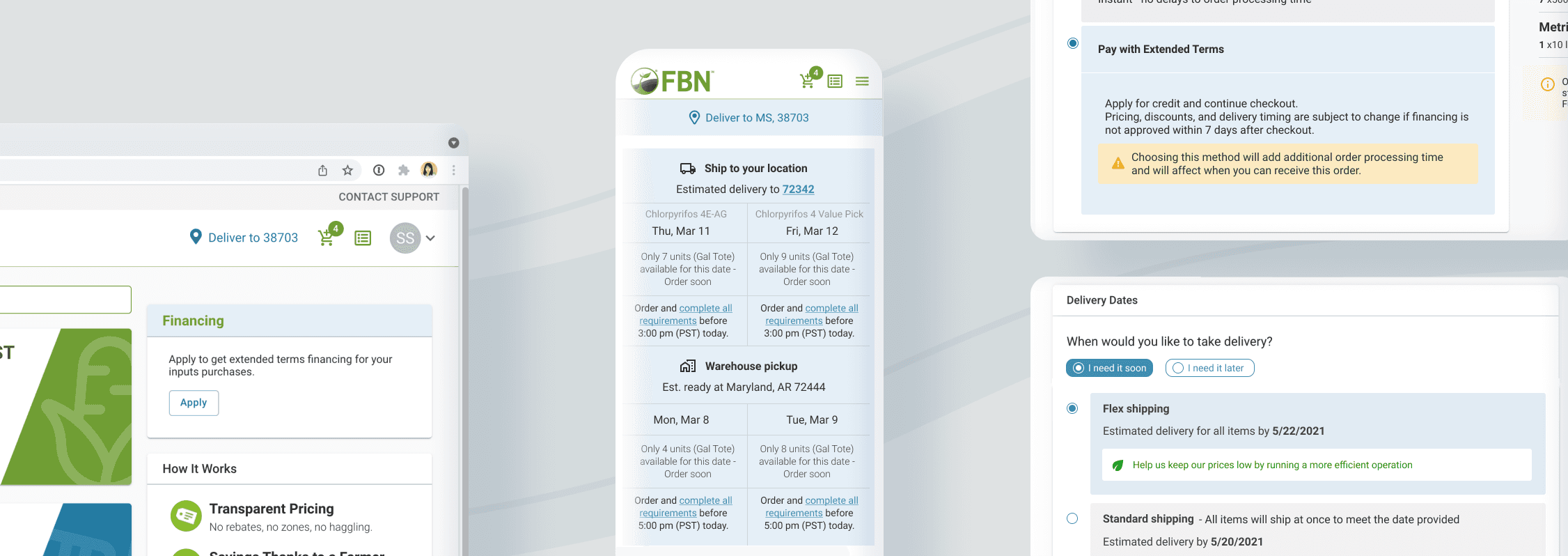
Scalable Delivery Promise
As Lead Designer, I architected the Scalable Delivery Promise system for FBN E-commerce. This systemic solution prioritized logistics constraints and reusability, directly contributing to a 55% YoY increase in Monthly Active Users (MAU)
Context & Constraints
Industry: B2C / B2B E-commerce (AgTech)
Timeline: ~3 months (Milestone 1)
Scope: Net-new feature, end-to-end system design
Strategic Constraints:
The feature had to be implemented on a soon-to-be-replaced legacy website, requiring tight visual and technical integration.
At the same time, it needed to be designed as a reusable system to support future platform migration.
Delivery timelines were influenced by complex logistics rules (product type, location, fulfillment method, payment method, and regional constraints).
This dual constraint shaped every design decision—from IA to component architecture.
Problem Framing
Core User Problem
Farmers purchasing time-sensitive inputs (especially chemicals) lacked confidence in when products would arrive, increasing hesitation and anxiety during critical in-season purchases.
Business & Operational Gaps
No standardized way to communicate delivery expectations pre- and post-purchase
Limited ability to measure logistics performance against customer-facing commitments
High risk of erosion in customer trust during peak seasonal demand
Hypothesis (HMW)
How might we help customers clearly understand delivery timing before purchase and maintain visibility into that promise after checkout—while enabling FBN to operationalize and measure fulfillment performance?
My Role & Team
I led the design of the entire "Promise" feature from concept through to hi-fidelity launch.
Cross-Functional Collaboration: I was the central design point, collaborating daily with Product Managers (prioritization, MVP), Engineers (feasibility, reusable components), and most critically, Logistics and Customer Service/Account Executives (to map complex use cases, operational constraints, and gather frontline feedback).
Impact
Key Metric: Site-wide Monthly Active Users (MAU) saw a 55% year-over-year increase following the launch of this feature (among other factors).
Business Value: Established a foundation for measuring FBN's logistics performance, turning an operational weakness into a customer trust accelerator and a scalable design system component.
The Process

Step 1: Discovery & Define
Activity:
Conducted user interviews with farmers (primary users) to understand their time-sensitivity and delivery expectations for in-season orders.
Performed a Comparative Analysis of leading e-commerce platforms to establish market benchmarks for delivery promise designs.
Key Insight:
Delivery timing was not “nice-to-have” information—it directly influenced purchase confidence and trust.
Deliverable:
Created a Customer Journey Map for the existing shopping flow, specifically pinpointing potential pain points where the lack of promise information caused anxiety/drop-off.
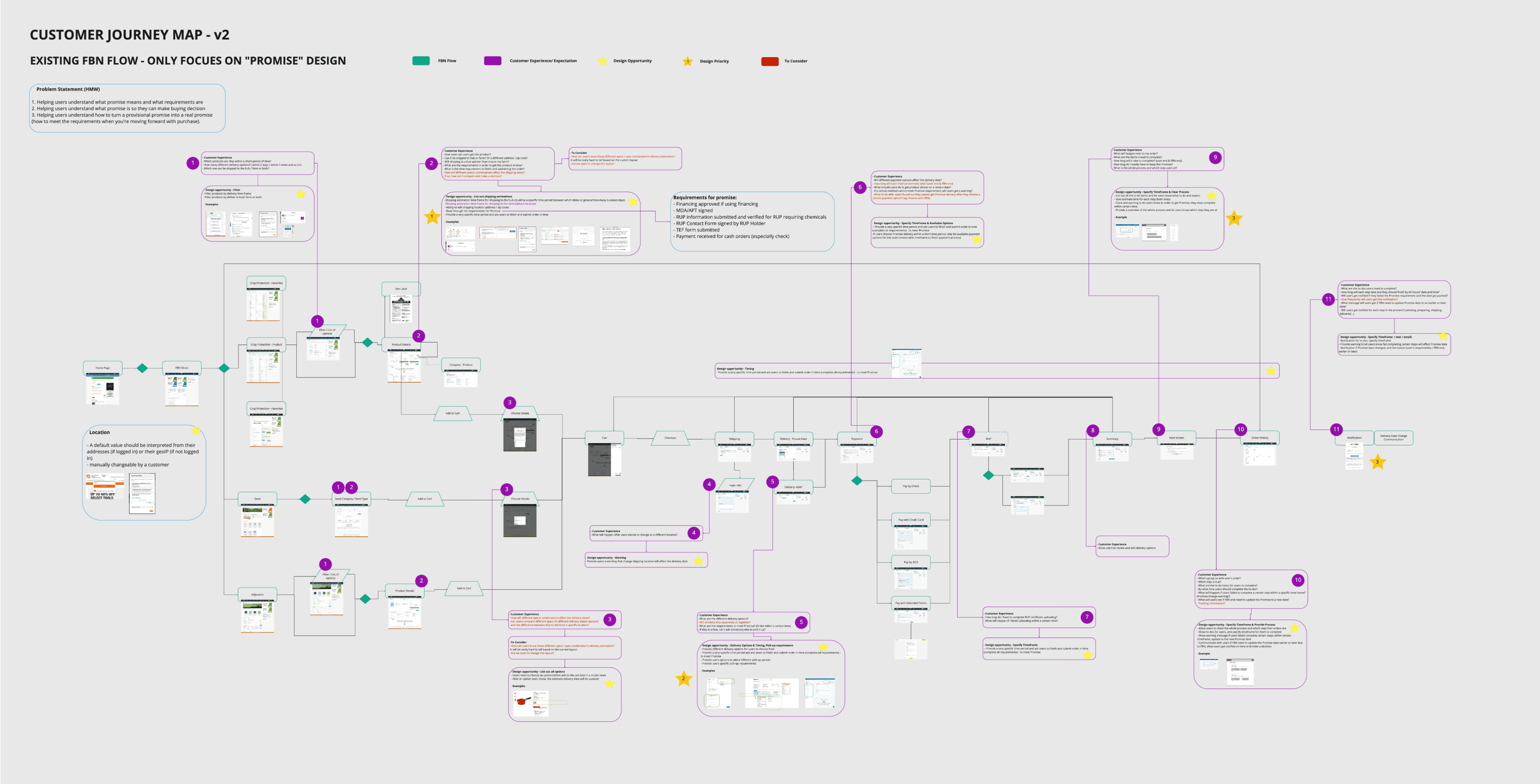
Step 2: Ideation & System Design
Designing Across the Full Customer Journey
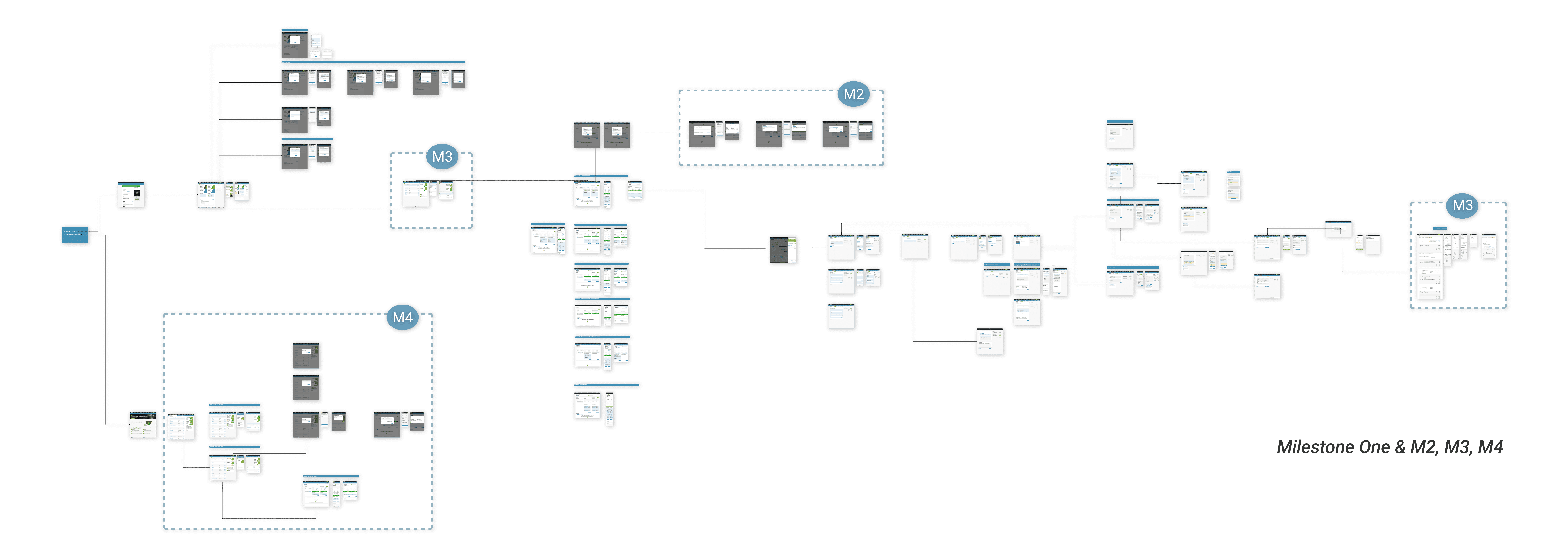
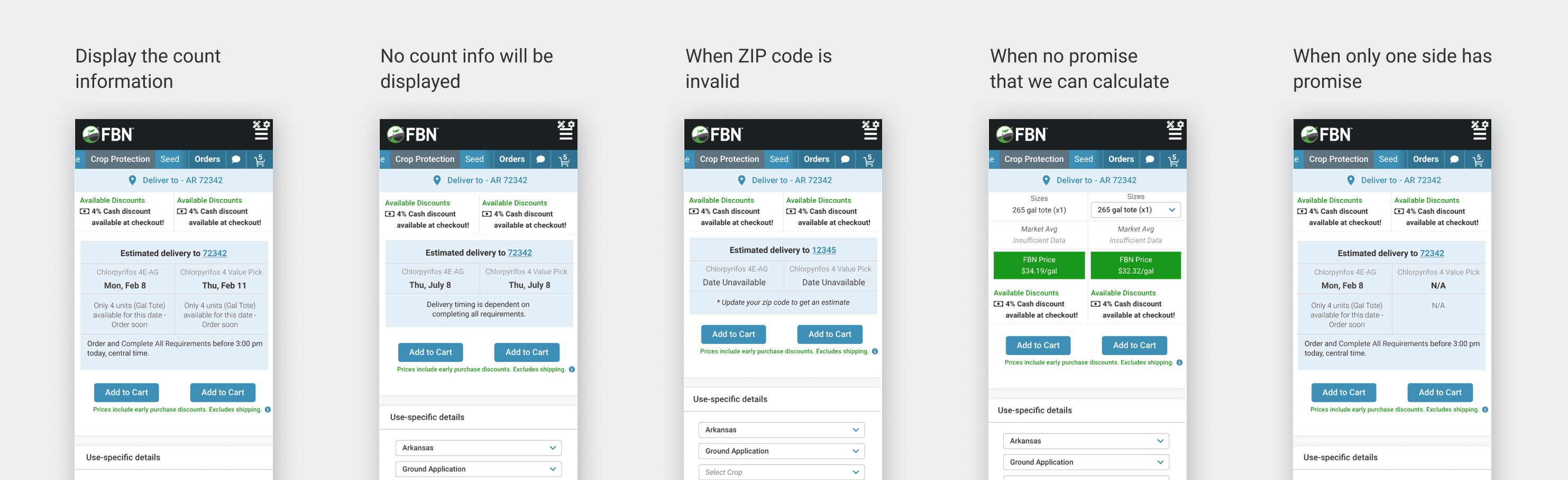
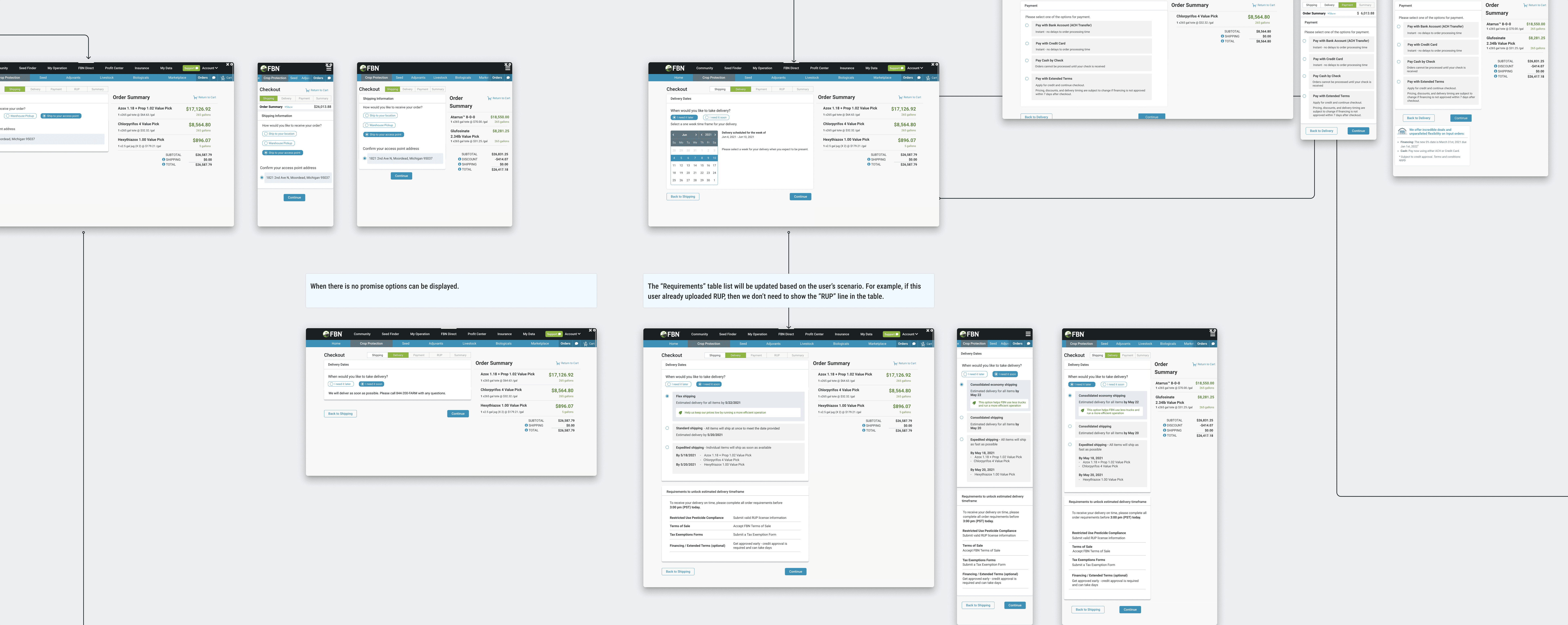
Rather than designing isolated UI screens, I mapped the entire promise system across the customer lifecycle.
Design Scope Included:
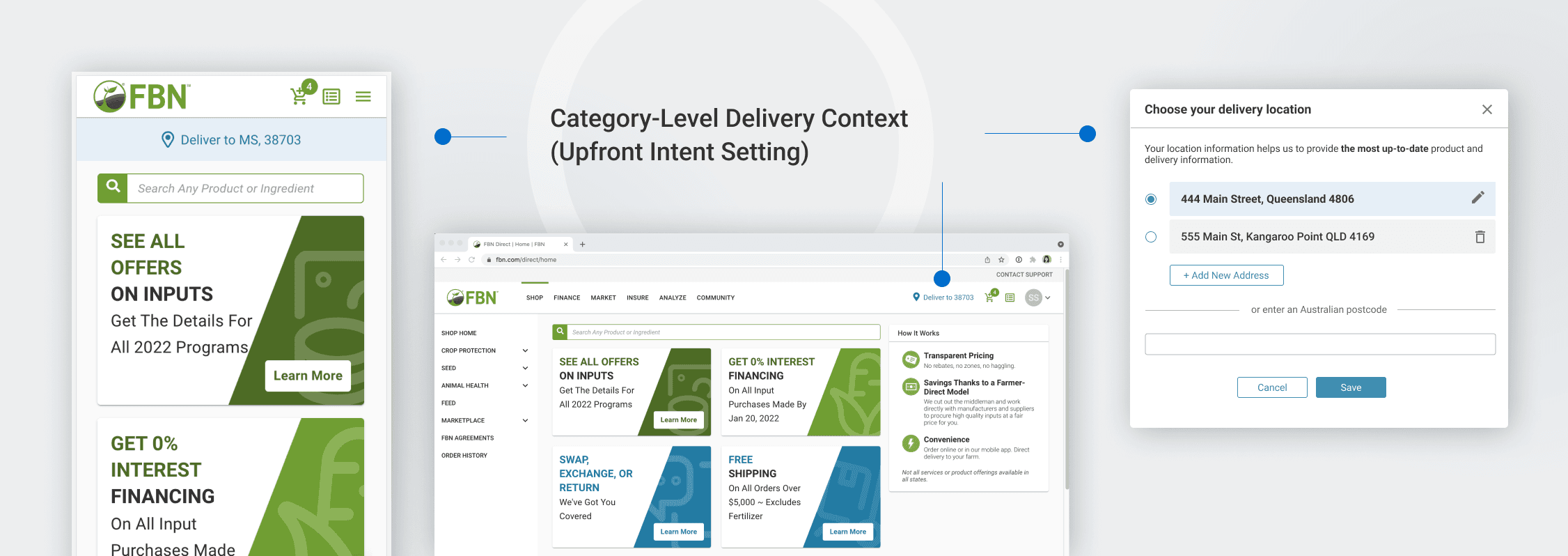
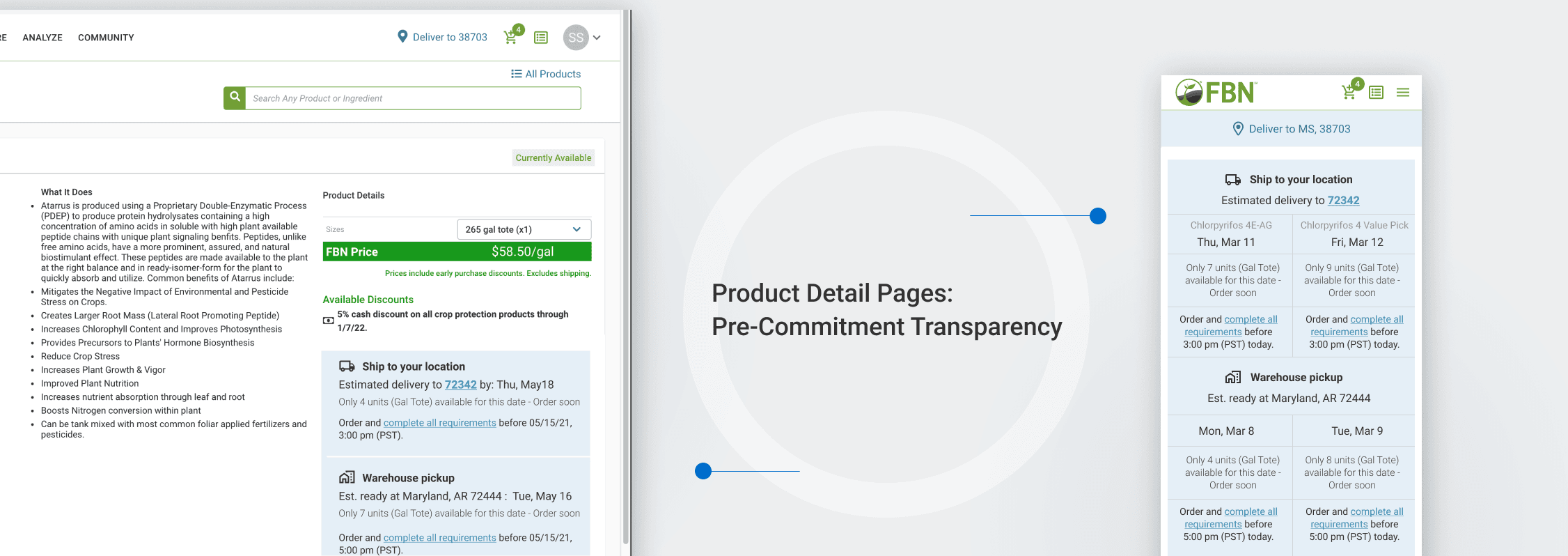
Product detail pages
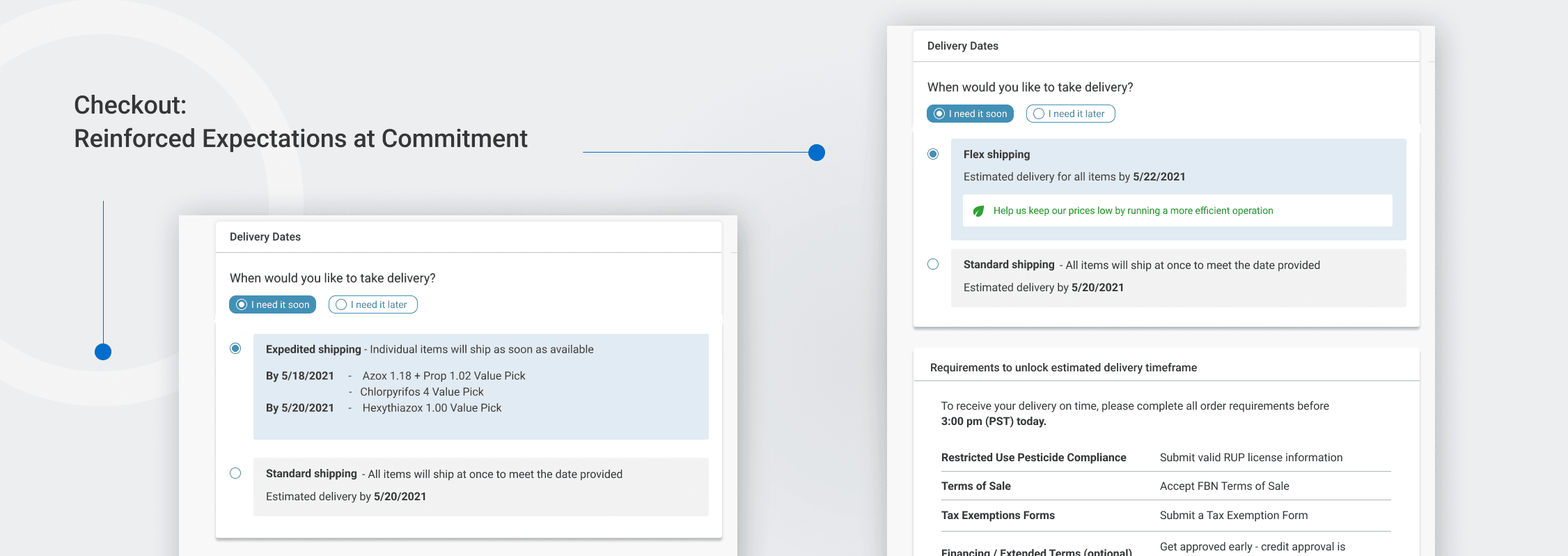
Checkout flow
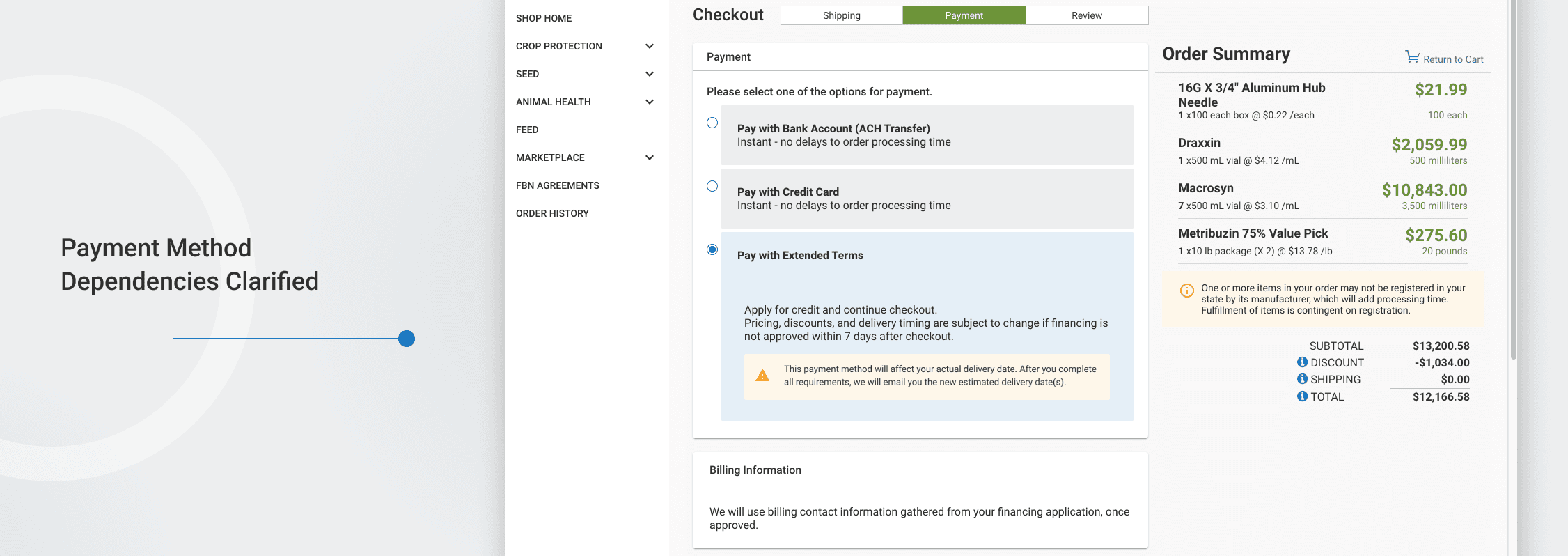
Payment method dependencies
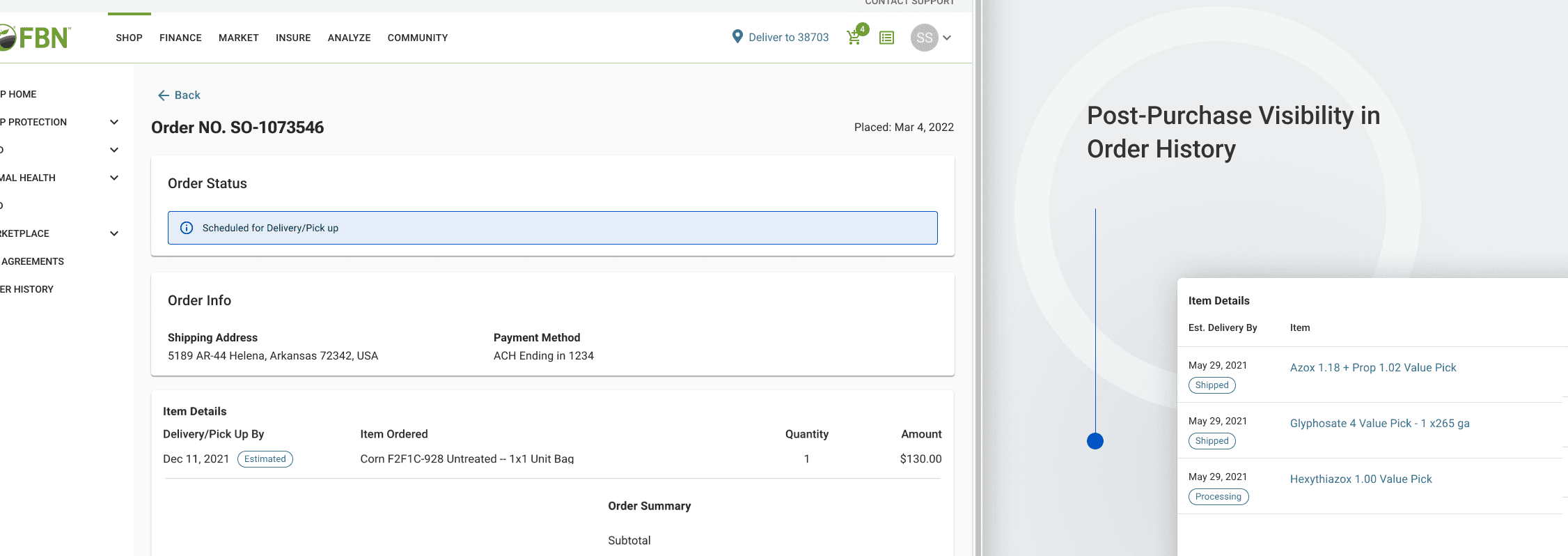
Order history and post-purchase visibility
Key Decision
Design the Promise as a modular, reusable system, not a one-off feature—ensuring consistency across the legacy site and minimizing future redesign costs.
Collaboration
Worked closely with Logistics and Engineering to surface operational constraints (e.g., pickup vs. delivery, regional rules, chemical handling requirements) and translate them into understandable user-facing language.
Step 3: Rigorous Validation & Iteration
Round 1:
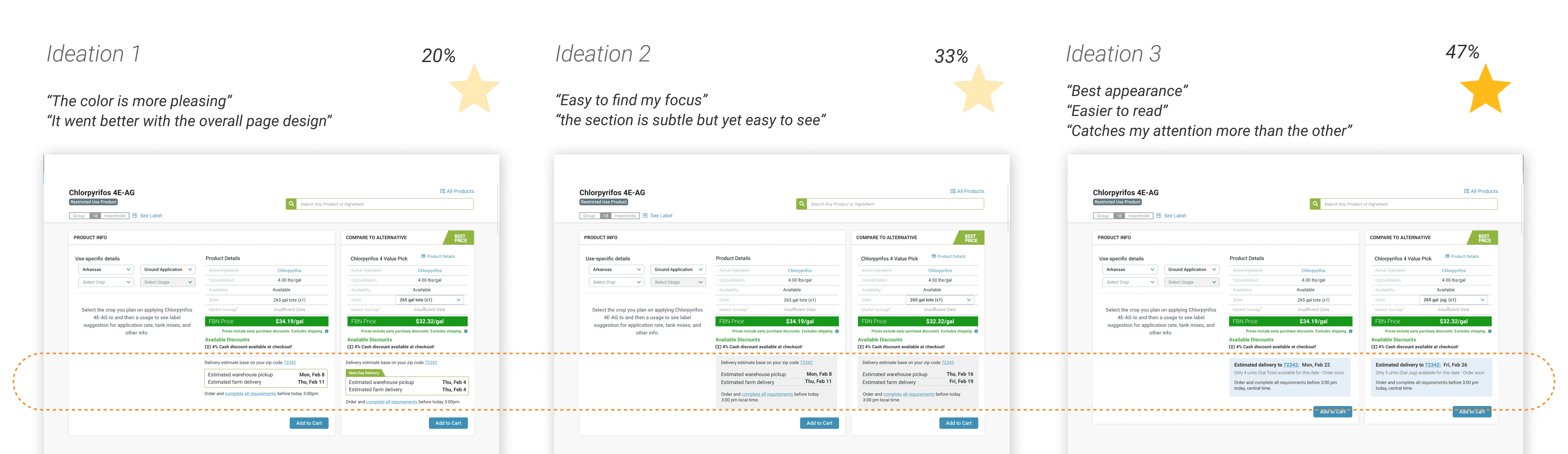
Concept Validation: Used Usabilityhub.com for quick quantitative feedback on different ideations, ensuring the design resonated and was easily scannable.
Round 2:
Moderated Usability Tests: Developed a screener survey to recruit 5 existing FBN farmer users for moderated, in-depth usability tests using an interactive Figma prototype.
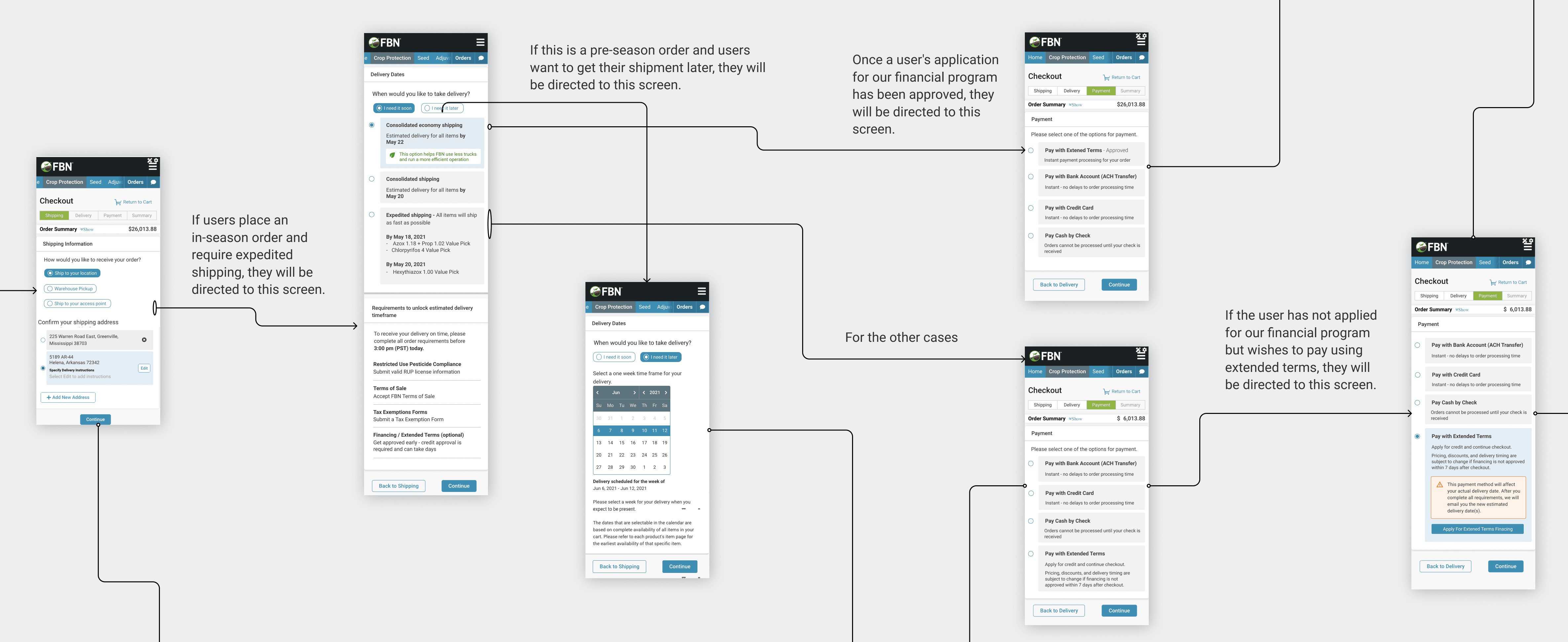
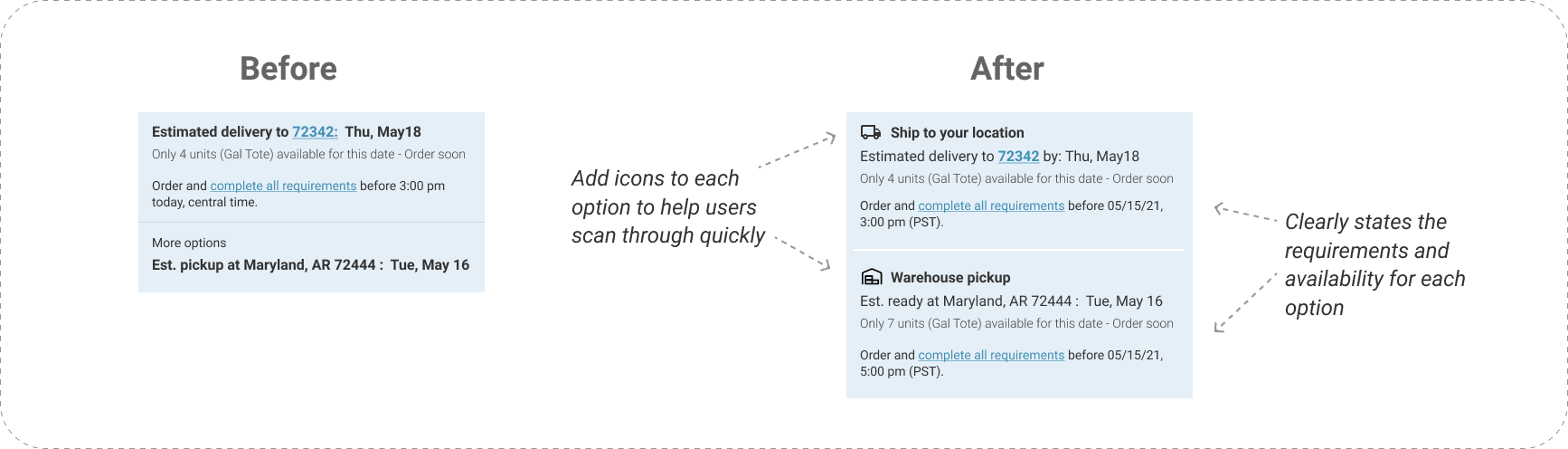
Key Insight: Testing revealed shipping options were not clear with a quick scan.
Iteration: Updated the design to enhance readability and scannability—a critical insight for information-rich enterprise platforms.
Key Finding
Users struggled to quickly scan shipping options and understand how conditions applied—especially under time pressure.
Design Response
Refined hierarchy, labeling, and visual grouping to prioritize scannability and reduce cognitive load on information-dense screens
The Solution & Deliverables
A Scalable Delivery Promise system embedded across the customer journey, balancing clarity, trust, and operational realism.
Impact & Outcomes
Quantitative Impact
The system went live for Milestone One at FBN.com. The feature contributed to a 55% increase in site-wide MAU (YoY) by improving customer confidence and setting clear expectations during the critical planting season.
Qualitative Impact
Increased customer confidence during peak seasonal purchasing
Established a standardized delivery promise language across teams
Enabled FBN to begin measuring logistics performance against customer-facing commitments
Organizational Value
The Promise system transformed delivery timing from an opaque operational constraint into a trust-building product capability and a reusable design system component.
Reflection & Learnings
What Worked
Deep collaboration with Logistics and Customer Service surfaced edge cases early
Designing for scale upfront reduced downstream rework
User testing validated assumptions and revealed critical clarity gaps
Key Takeaways
Operational alignment is essential when designing systems tied to real-world fulfillment
Readability and scannability are mission-critical for high-stakes, information-dense workflows
Systemic thinking enables design to outlast individual features and platforms